Air or Sea from China to the UAE? A Cost Calculation, Not an Opinion
“Air is expensive, sea is slow” is not a decision framework. Here is one. Step one: work out what you are actually being charged for Air freight bills on chargeable weight: the greater of actual weight and v…
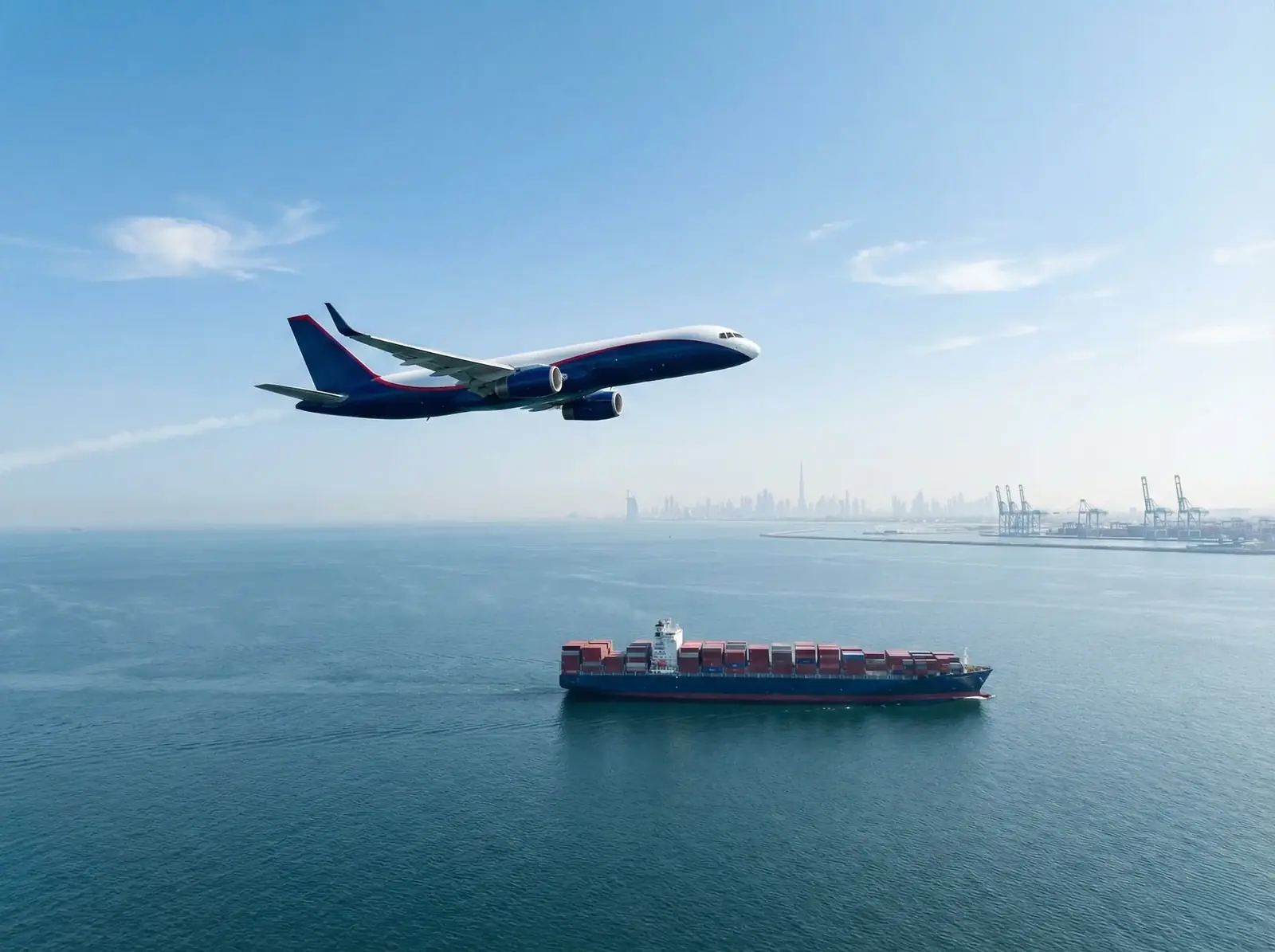
Choose air freight from China to the UAE when the shipment density is above roughly 167 kg per CBM, when the total is under about 150 kg, or when the value of arriving three weeks earlier exceeds the freight difference. Choose sea freight for everything else — and switch to a full container above roughly 15 CBM.
“Air is expensive, sea is slow” is not a decision framework. Here is one.
Step one: work out what you are actually being charged for
Air freight bills on chargeable weight: the greater of actual weight and volumetric weight, where volumetric weight = CBM × 167.
A 2 CBM shipment weighing 180 kg has a volumetric weight of 334 kg. You pay for 334 kg, not 180.
Sea LCL bills on the greater of CBM or metric tonnes, with a 1 CBM minimum. Sea FCL bills a flat rate per container regardless of how full it is — which is why a half-empty 40ft can still beat LCL.
Step two: find your density
Divide total weight by total CBM.
- Above 200 kg/CBM — dense cargo. Air is less punishing than people assume, because you are paying actual weight rather than air.
- 100–200 kg/CBM — the genuine grey zone. Run both numbers.
- Below 100 kg/CBM — light and bulky. Air is brutal here. Ship it by sea.
Step three: the break-even most people never calculate
Sea has a cost air does not: thirty days of your money sitting in a container.
For a USD 40,000 order at 30% gross margin, three extra weeks of transit is three weeks of a sales cycle you cannot run. If you turn that inventory in six weeks, the delay costs you a meaningful slice of a cycle — often more than the freight difference on a small, dense, high-margin shipment.
This is why samples and first orders should almost always fly, even when the per-kilo rate looks offensive. You are not buying speed, you are buying earlier information about whether the product sells.
Step four: the LCL to FCL switch
Below roughly 12 CBM, LCL is normally cheaper. Above roughly 15 CBM, a 20ft container usually wins — and brings side benefits: no co-loading, no waiting for the groupage container to fill, less handling and less damage.
Between 12 and 15 CBM, ask for both quotes. It flips with the season.
A rule of thumb worth remembering
Ship by air when any of these is true:
- The shipment is under about 150 kg
- Density is above roughly 167 kg/CBM and the value per kilo is high
- It is a sample, a first order, or a replacement for a stockout
- The margin lost to being out of stock exceeds the freight difference
Ship by sea otherwise. And when you are genuinely unsure, split it: air the fast-moving SKUs, sea the rest. Splitting a shipment is not indecision, it is portfolio management.
What we need to price both
Cartons, gross weight, dimensions per carton type, commodity, pickup city and delivery address. With that we return an air number and a sea number side by side, landed, with duty included — so the trade-off is arithmetic instead of a sales pitch.